What Sets Alpine Fuel Nutrition Apart: Functional Sports Nutrition in the Front Range of Colorado
If you live along the Front Range of Colorado, you already know that we live in an athletic paradise. Between…

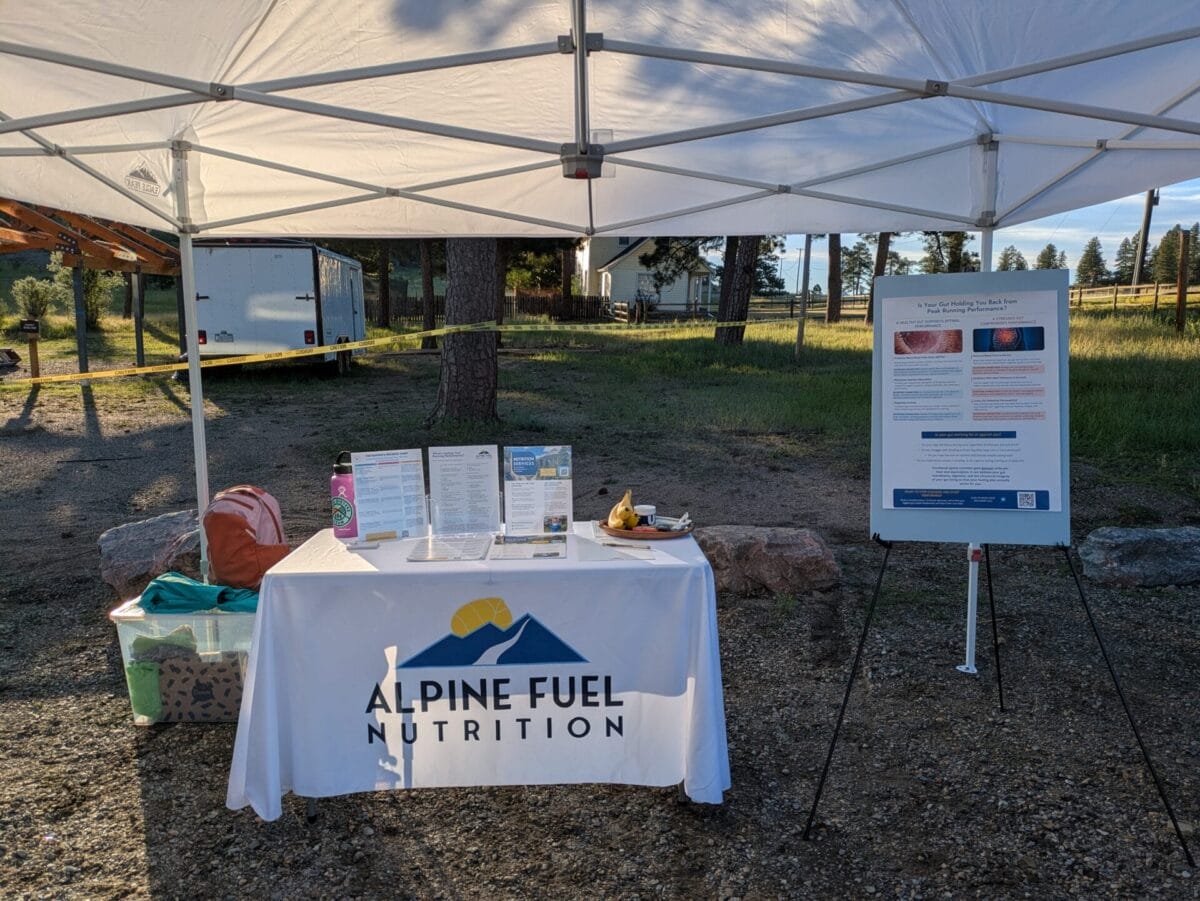
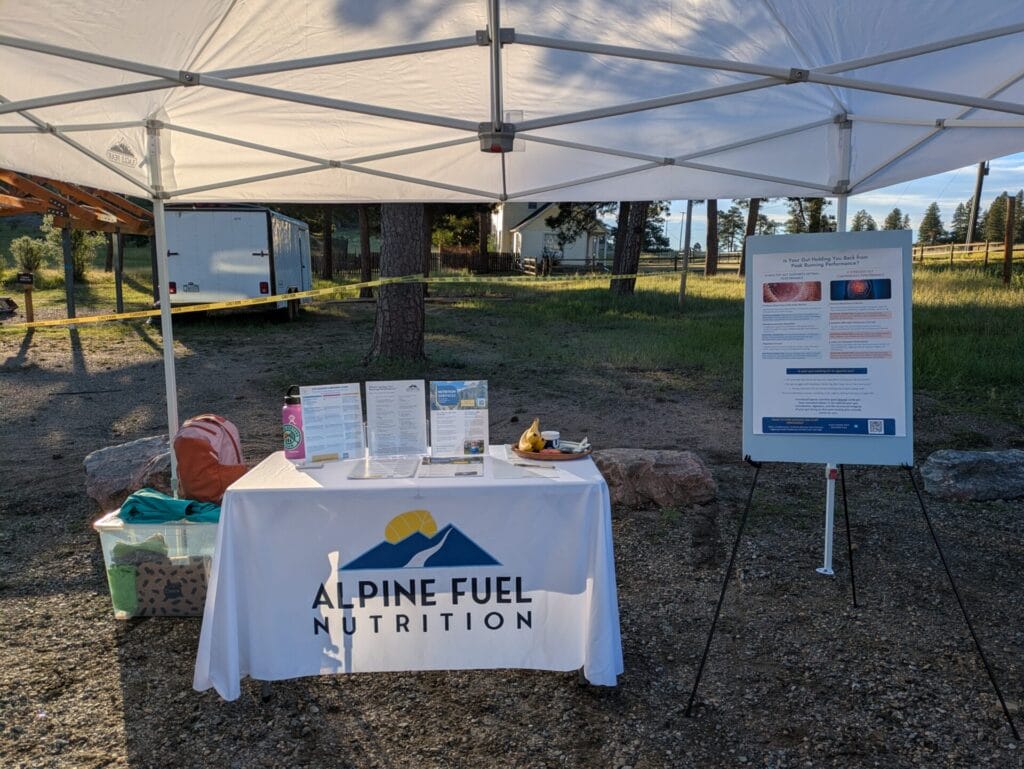
If you’re looking for a fun way to spend a summer morning in the Colorado foothills, the Evergreen Park & Recreation District Trail Race Series is hard to beat. I’ve run multiple races of theirs in previous years, including the Elk Meadow race, and can vouch for how much fun the races are! This weekend, I had the opportunity to host a booth for my functional nutrition practice, Alpine Fuel Nutrition, at the race held at Alderfer/Three Sisters Park. This race was a great reminder of why I love working with Colorado trail runners.
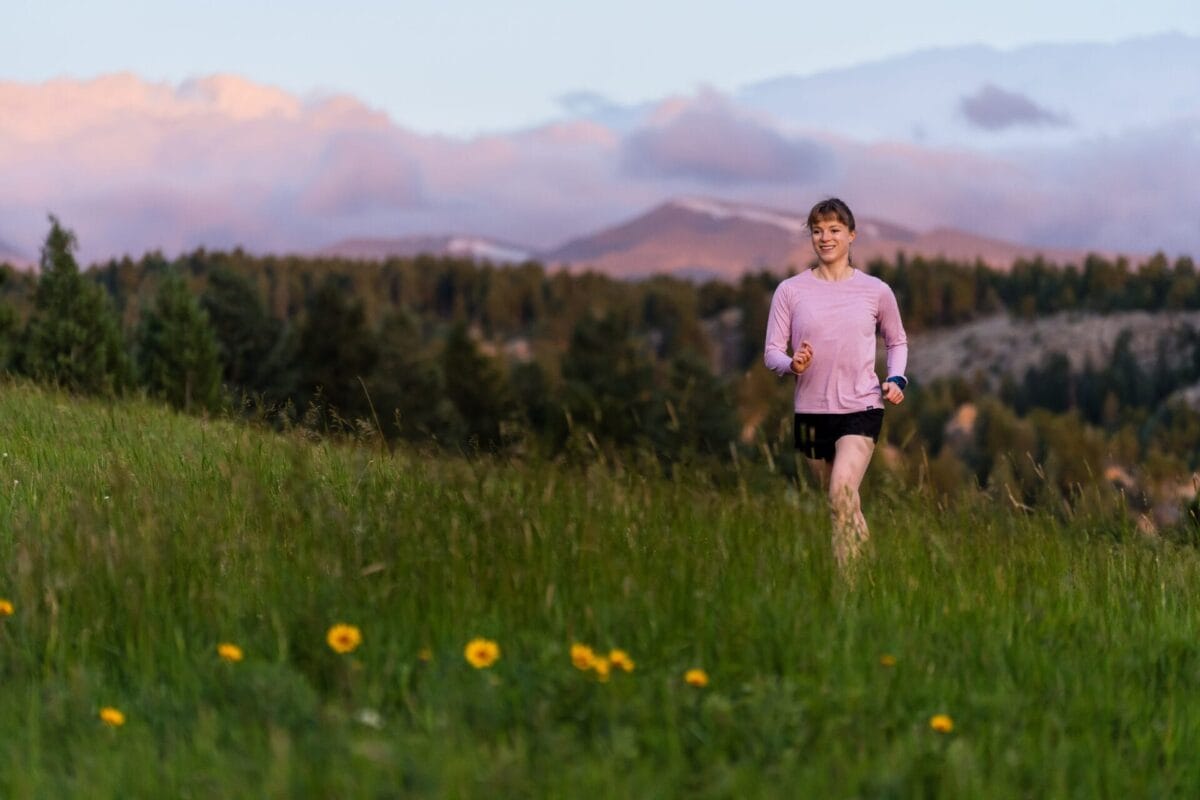
Whether you’re a seasoned trail racer or just getting back into running, events like these showcase everything that makes the Front Range trail running community so special – beautiful scenery, a low-key atmosphere, and community.
If you live in the Front Range of Colorado and have never run at Three Sisters/Alderfer Park, add it to your list!
The course winds through majestic evergreen trees, impressive rock formations, and rolling hills that offer just enough challenge to keep things interesting. It’s also the kind of place where spotting wildlife is an everyday occurrence. Deer and elk are common sights, and the park is even home to black bears (although hopefully not on race morning!).
One of my favorite parts of the event was seeing so many kids out on the course. A young man (probably 8 or 9 years old) won the 5k! Watching young runners challenge themselves alongside adults was a wonderful reminder that trail running can be a lifelong sport. I hope these kids are fueling well for the demands of distance running!
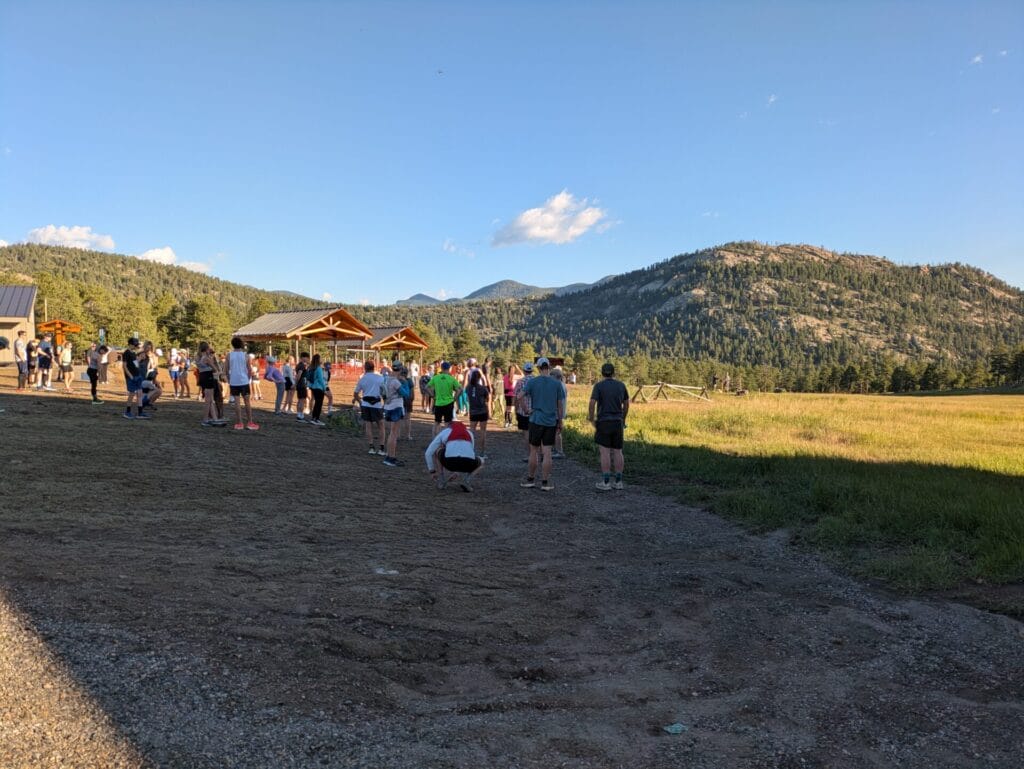
As a functional sports nutritionist, I can’t help but notice nutrition patterns when I talk with active people, and the runners at this race were no exception. One interaction really stood out to me. A woman stopped by my booth shortly before the race (literally about 5 minutes before) and asked if she could have one of the energy gels from my display because she realized she hadn’t eaten anything before the race. She’s certainly not alone.
Throughout the morning, I heard several runners mention that they often run fasted, even before long runs and hard efforts. While fasted training may have a place in very specific situations, many runners are unintentionally making training feel harder than it needs to be, and potentially even harming their health by constantly running in a fasted state.
If you’ve been doing a lot of fasted running/training, check out my popular blog on fasted running to learn when it may, or may not, make sense.
I fielded a handful of nutrition questions throughout the morning, especially about the recent trend toward high-carbohydrate fueling. Several runners wondered:
My answer to these runners is: it depends. Your fueling strategy should match your training volume, performance AND health goals, and individual physiology, not the latest trend.
Interestingly, there were several questions I didn’t hear that I think deserve way more attention, especially for Colorado endurance athletes:
These are often the questions that have the biggest impact on how you feel during your runs.
At my booth, I was shared one of my favorite free resources: the Runner’s Decoder Sheet. It’s designed to help runners connect common symptoms, like low energy, gastrointestinal issues (nausea, bloating, urgency during running), recurrent injuries, and weight loss resistance, to potential nutrition strategies that may help.
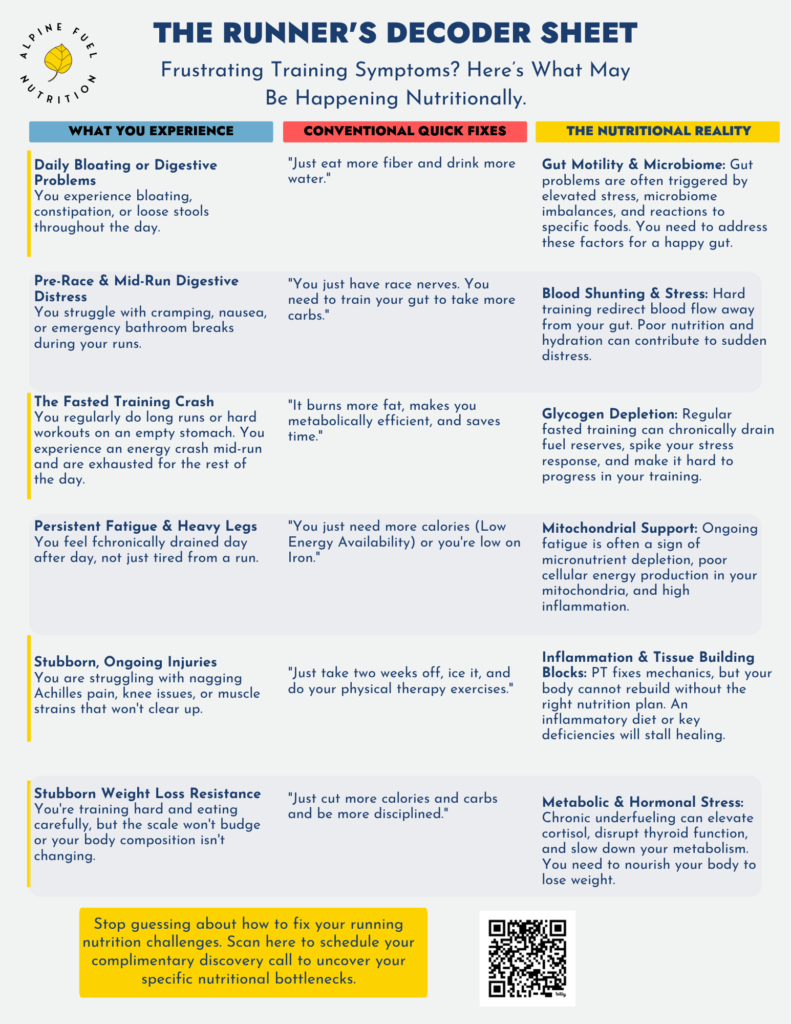
My goal with this “decoder” sheet is to get the gears turning in runners’ brains and help them understand how common symptoms and training challenges can relate to their nutrition. If this decoder sheet got you thinking about the aspects of your health and performance that need attention, I encourage you to schedule a complimentary discovery call with me to learn about how I can help you!
Even though vendor traffic was a little slow this weekend, I loved spending the morning connecting with runners and being part of another great event in the Front Range trail running community.
If you’re planning to run more races this summer and have questions about fueling, hydration, altitude, or recovery, I’d love to help. As a functional sports nutritionist, I work with Colorado trail runners and endurance athletes to create personalized nutrition strategies that support performance, recovery, and long-term health.
Happy trails, and maybe I’ll see you at the next race at Staunton State Park in July!
The content provided on this nutrition blog is intended for informational and educational purposes only. It is not a substitute for professional medical advice, diagnosis, or treatment. Always seek the advice of your physician or other qualified health provider with any questions you may have regarding a medical condition. Never disregard professional medical advice or delay seeking it because of something you have read on this blog.
The information and recommendations presented here are based on general nutrition principles and may not be suitable for everyone. Individual dietary needs and health concerns vary, and what works for one person may not be appropriate for another.
I make every effort to provide accurate and up-to-date information, but the field of nutrition is constantly evolving, and new research may impact dietary recommendations. Therefore, I cannot guarantee the accuracy or completeness of the information presented on this blog.
If you have specific dietary or health concerns, please consult a qualified nutritionist or another healthcare professional for personalized guidance.
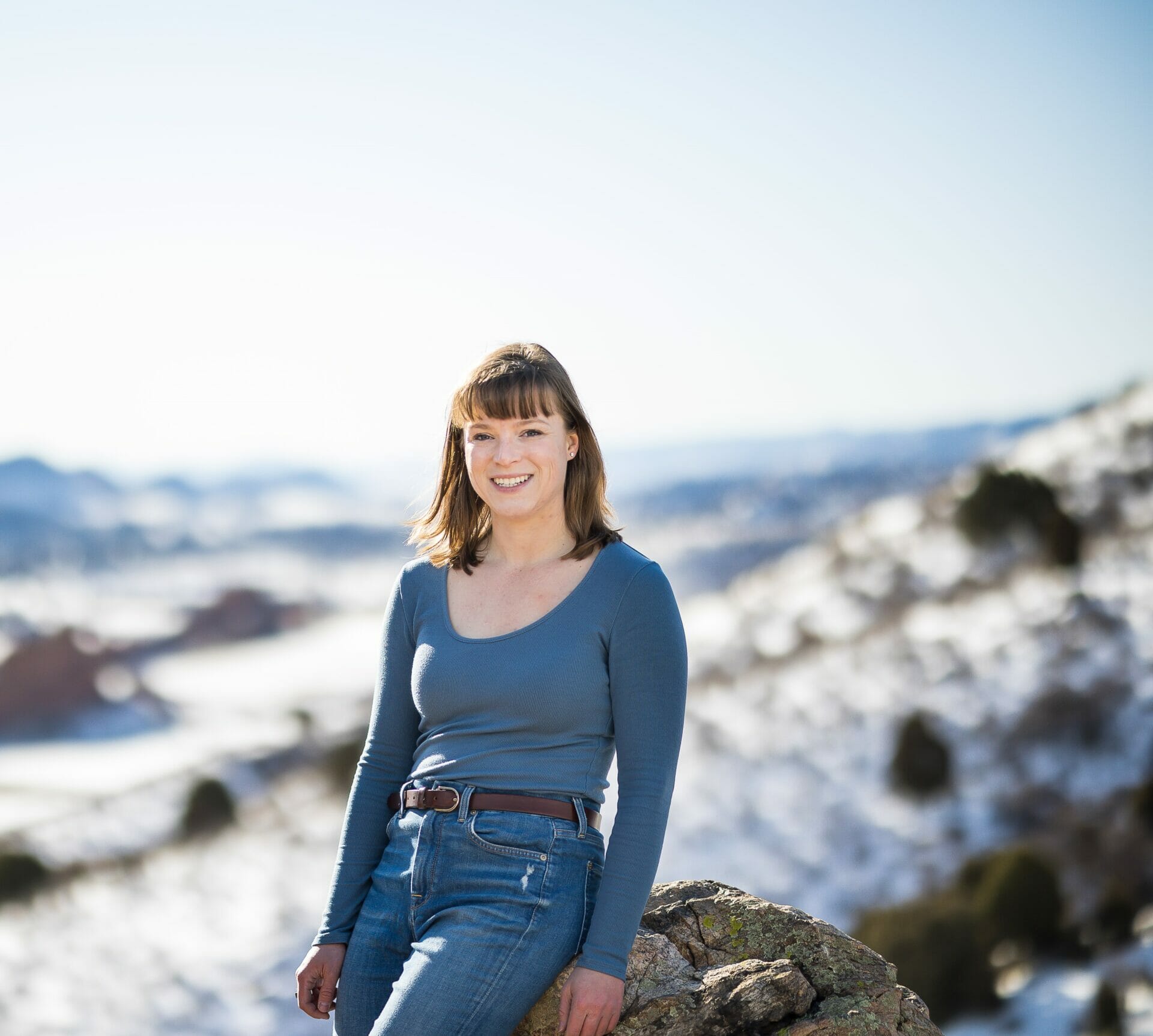
I empower others through nutrition to conquer their mountain adventures, drawing from my own experiences.
With a background in Biomedical Science and an M.S. in Human Nutrition, I’m a Certified Nutrition Specialist and Licensed Dietitian Nutritionist. My journey in functional medicine has equipped me to work alongside athletes and tackle complex health cases. As a passionate trail runner, backcountry skier, and backpacker, I strive to support others on their paths to peak performance and well-being.
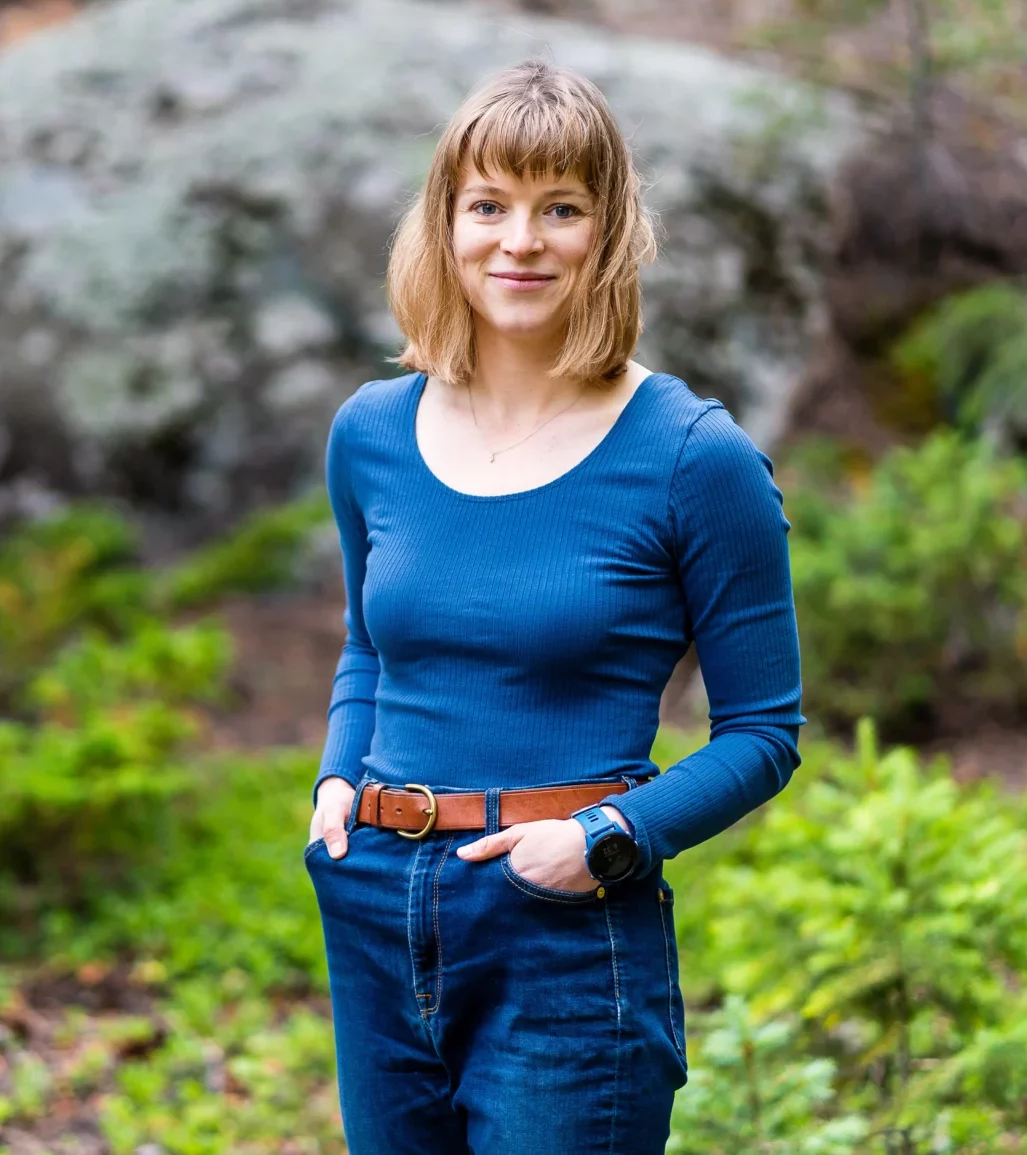
Sign up for updates that come right to your inbox.