What Sets Alpine Fuel Nutrition Apart: Functional Sports Nutrition in the Front Range of Colorado
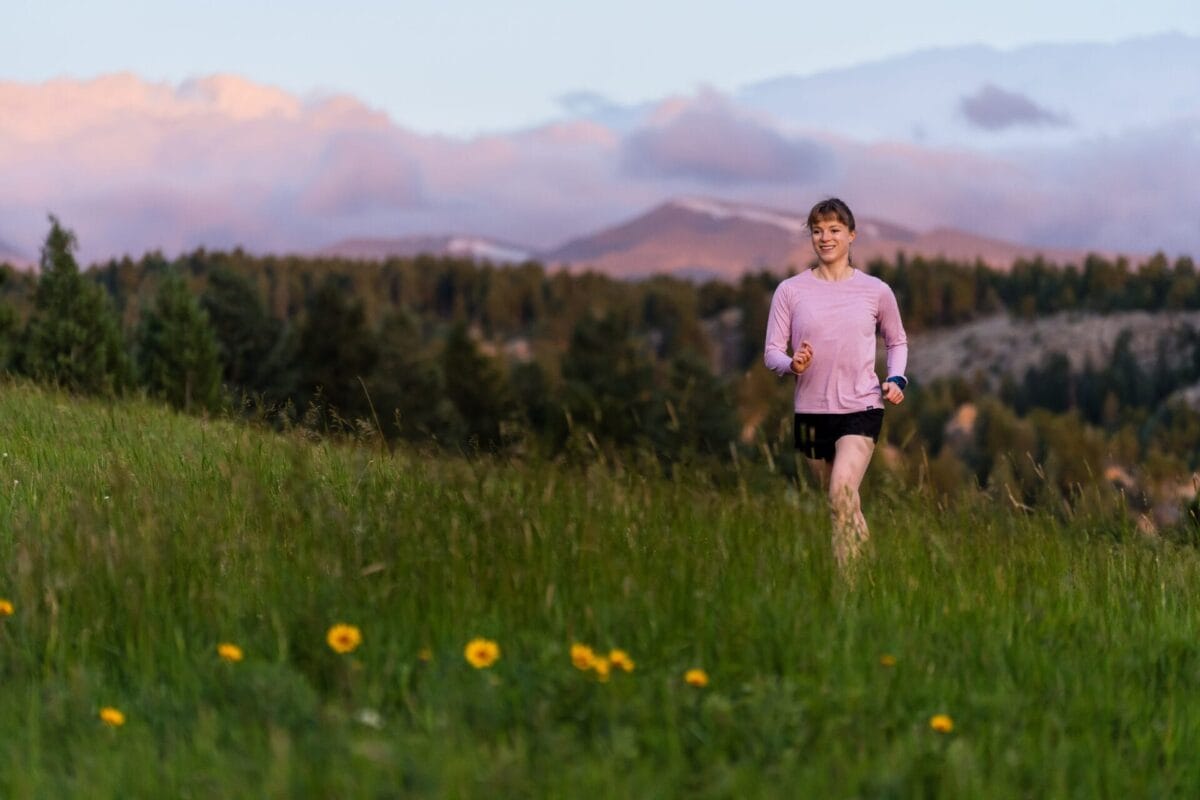
If you live along the Front Range of Colorado, you already know that we live in an athletic paradise. Between…
You can backpack with your baby. Really!
You’ve probably been told by well-meaning family and friends to wait to backpack with your child until they can walk, or until they’re out of diapers, or until they can carry their own pack. To wait until it is “easier.” However, here’s what I’ve learned as both a functional sports nutritionist to outdoor enthusiasts and an outdoorsy mom who refuses to put adventure on hold for years: waiting won’t necessarily make it any easier. Waiting until things are “easier” will, however, keep you from doing the things you love in the here and now, and prevent you from introducing your children to those special outdoor experiences.
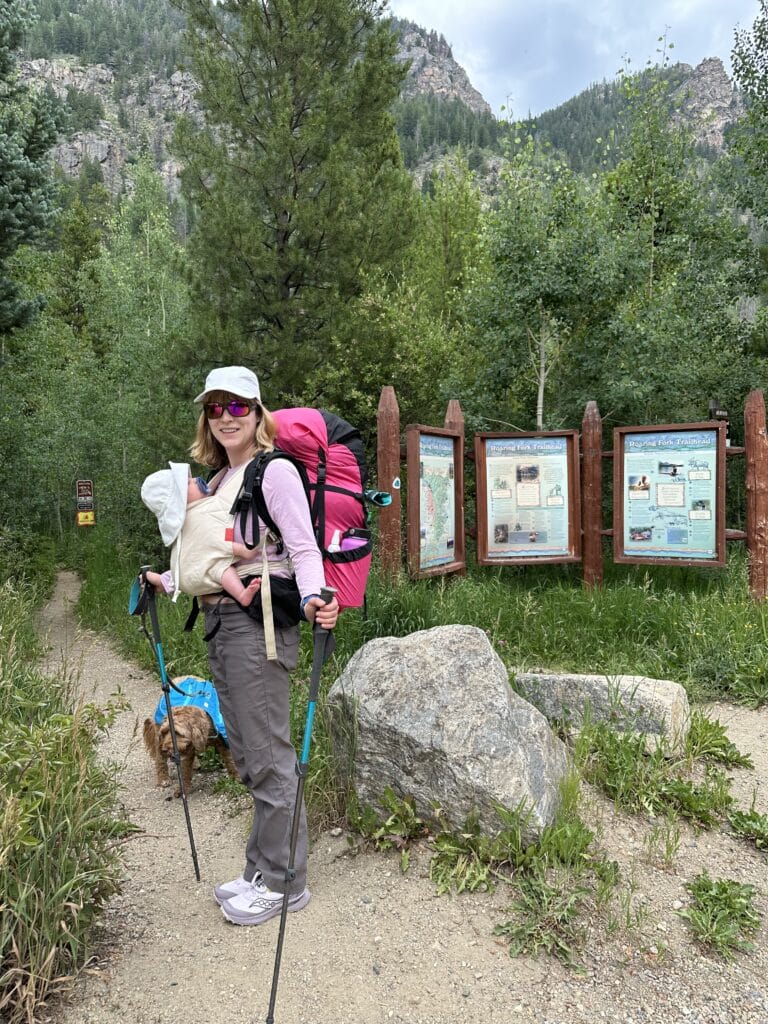
My husband and I took our son on his first backpacking trip when he was 11 weeks old. This was NOT a day hike or a stroller-friendly trail. It was a real backpacking adventure 3 miles in, 3 miles out) at elevation (the highest elevation was ~10,000 ft) – a true sleep-in-a-backpacking-tent, carry-everything-you-need backpacking trip.
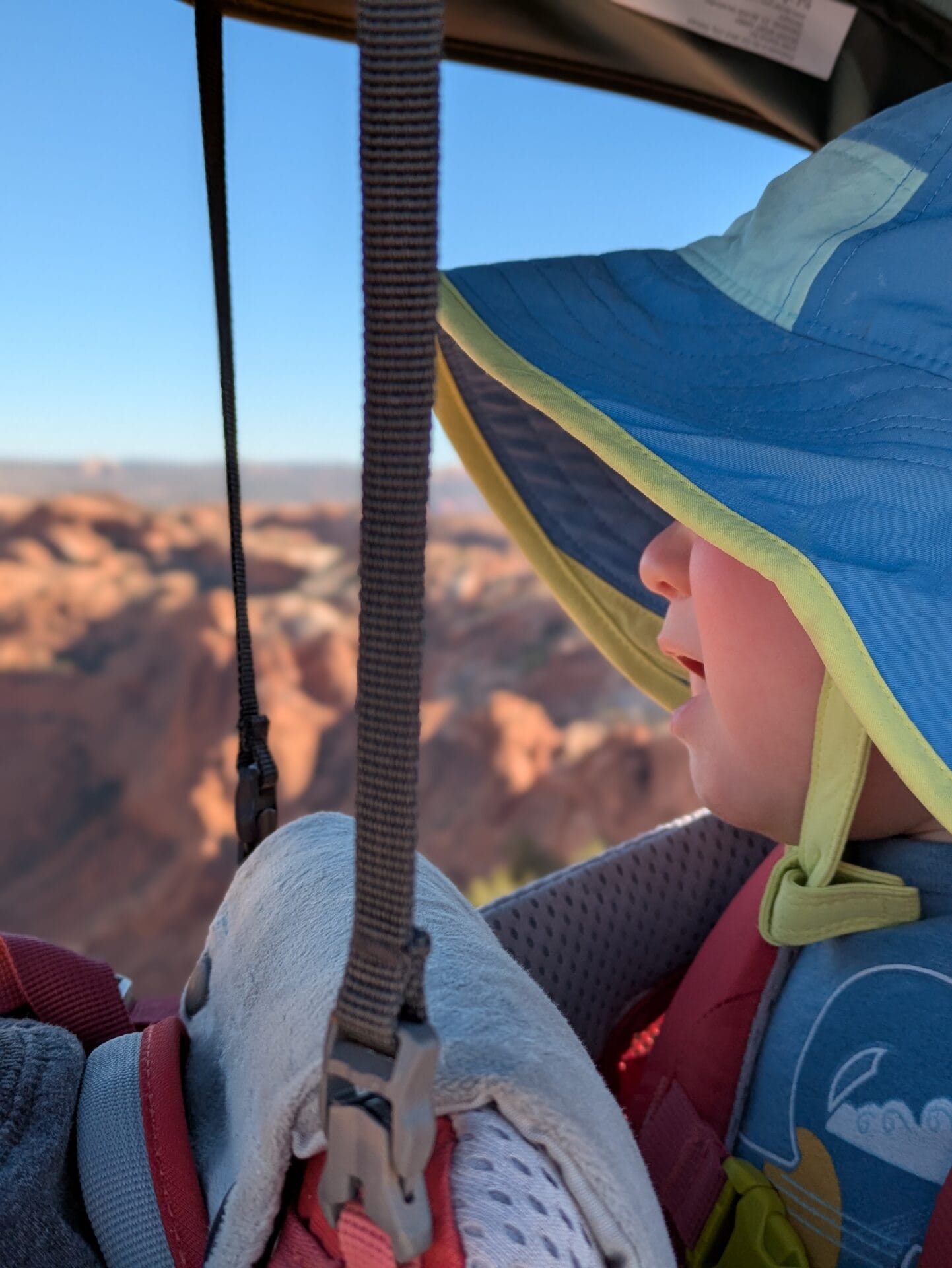
When our son was 10 months old, we did another backpacking trip in Canyonlands National Park – a remote and beautiful environment.
I’m sharing a bit about my experiences to show you that it is possible to backpack with your baby. The adventurous part of your life is not over. With some thoughtful trip and nutrition planning, an open mind, and a resilient spirit, backpacking with a baby can be a beautiful and memorable experience!
Disclaimer: Backpacking is NOT appropriate for all babies. Babies born prematurely; babies with heart, lung, and/or kidney issues or other physiological or developmental abnormalities; and babies consuming formula (which cannot be safely prepared or stored while backpacking), are typically not candidates for backpacking. Heat, cold, sun exposure, and altitude are all critical considerations. My son was a full-term and exclusively breastfed baby who lives at 8,000 ft, which made backpacking (and backpacking at altitude) possible. I would also never recommend that a single adult backpack with a baby; you need another able-bodied adult with you in case of an emergency. Work with your pediatrician to determine whether backpacking is appropriate for your baby.
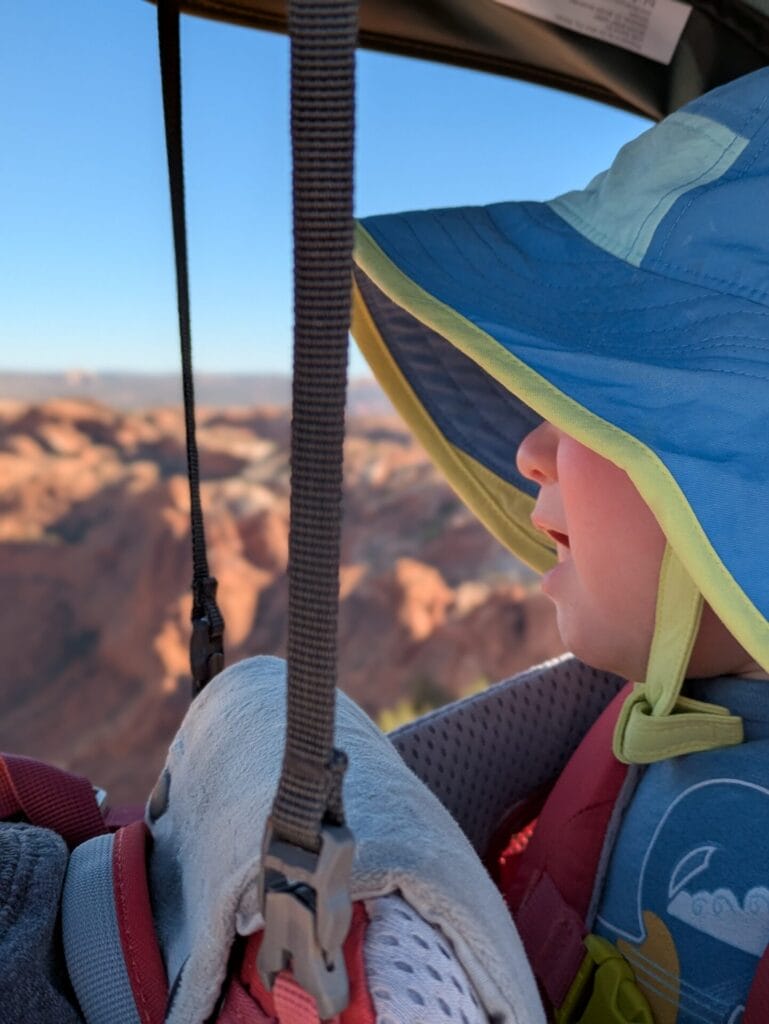
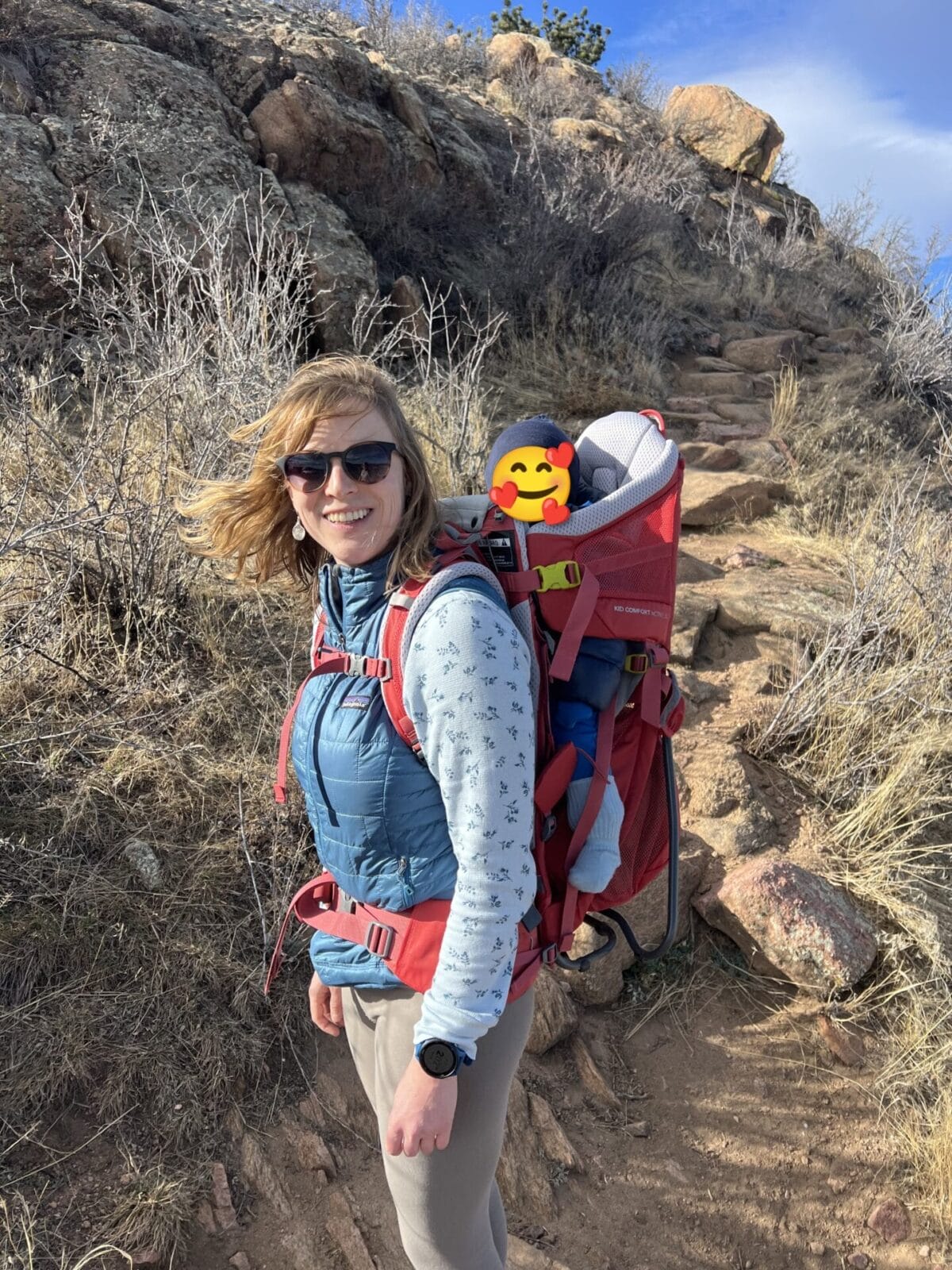
We arrived at the trailhead late in the afternoon, after car camping the night before on public land outside Moab, Utah. My son was 10 months old, strapped into the baby backpack, and looking around curiously at the desert landscape surrounding us.
Our backpacking plan was carefully thought out: an overnighter in the Needles District of Canyonlands National Park. We would hike 3 miles tonight and 3 miles out tomorrow morning. We strategically chose to start our hike in the late afternoon to avoid the beating midday sun and heat, which could be dangerous for a baby.
Our packs were significantly heavier than usual (not just because we were carrying an 18-lb baby). We carried more water than usual, along with our son’s clothing, sunscreen, and food, and all our usual gear. And lots of diapers, of course.
At the trailhead, a park ranger stopped us (probably with some measure of concern, wanting to make sure we weren’t crazy people endangering our child). When we spoke with him and shared that we’d backpacked in this part of Canyonlands NP many times before, and discussed our plans, he visibly relaxed and wished us well (and good luck)!
The hike into our backpacking site was honestly pretty easy. The trail wound through pinyon pine and little cacti, past that funky-looking, crusty soil composed of various soil microbes. Our son was quiet and curious for nearly the entire hike to our camp, only fussing in the last few minutes.
Once we arrived at our campsite, a flat, sandy area surrounded by trees, my husband promptly set up the backpacking tent so we had a contained space to put our son while heating water for dinner. I fed our son one of his Serenity Kids pouches (no affiliation) for dinner (my preferred pouch option when camping because it provides protein, vegetables, and healthy fats, not just fruit like many pouch brands). As the sun set, I wiped some of the zinc oxide sunscreen (I prefer Badger brand sunscreen – no harmful synthetic ingredients and it is environmentally friendly) residue off his face and arms, got him into his merino wool onesie (I love Iksplor’s merino wool midlayer for babies – I have no affiliation with them) and sleep sack for bedtime, and he settled in for nursing and slept next to me in the tent.
Side note: if you co-sleep/bedshare with your baby at home, sleeping with your baby in a backpacking tent will most likely feel natural and easy, as it did for me. Just as our baby loves bedsharing at home (and we love nurturing his sleep), our baby loved cuddling up close in our sleeping bags! 😊
As the sky darkened and the stars emerged, I thought, “This is working. We’re actually doing this!”
Morning the next day was lovely. We woke as the sun was rising, made our coffee and breakfast, I nursed the baby and fed him his breakfast, and then we loaded up our packs for the trek back to our car.
My milk supply didn’t suffer at all; our son was content and well-rested and we felt strong and energetic throughout the trip. Ultimately, had a successful and very enjoyable time.
Most importantly, we felt alive and happy to share something we truly love – backpacking – with our son!
Let’s talk energy and hydration on the trail, which is essential if you are a breastfeeding mom on the trail. At a bare minimum, you need 300-500 extra calories per day while breastfeeding. However, this is just a basic range, and you may need more depending on how often you’re nursing, your baseline training routine, and your individual metabolism. Add in backpacking, and you may need significantly more daily calories than when you’re just nursing and caring for your baby at home.
Depending on your pack weight, terrain, elevation gain, and ambient temperature, backpacking can burn hundreds to thousands of calories per day. (Source)
For breastfeeding mothers, the stakes are even higher. If you underfuel during your backpacking trip, your milk supply may drop, leaving your baby hungry (and really unhappy as a result). Your body may start to break down muscle protein for energy, and you’ll probably feel exhausted and unwell. Fueling appropriately can help you avoid these significant problems and feel and function well on your trip. Here are some tips for staying well-fueled as a breastfeeding backpacking mom:
Set reminders to eat and drink if needed. Drink at every break, and eat something every two hours, even if you don’t feel hungry. Your body will thank you!
Baby food pouches tend to be very fruit-dominant, with few options that contain actual protein and vegetables. When you’re backpacking, and if your baby has started solids, then they need pouches that provide more than just sugar from fruit – your baby needs balanced meals that provide protein, fiber, carbohydrates, and fat.
Fruit-only pouches are also likely to send your baby’s blood sugar on a roller coaster, which can translate into a cranky, unhappy baby.
For complete-meal baby pouches, I recommend Serenity Kids. They’re built around protein and vegetables, with added healthy fats. A typical pouch might contain chicken, butternut squash, and kale, blended with bone broth and avocado oil. That’s a complete meal!
How much to pack:
For a 10-month-old eating three meals a day plus snacks, I packed:
I also brought my son’s silicone straw cup so he could sip water (transferred from our water bottles) during the trip.
Crucial signs your baby needs more water:
Water intake for babies is a delicate balance; for a baby who has started solids, you need to provide enough water to support digestion and prevent dehydration, but you also don’t want your baby to fill up so much on water that they don’t have enough room for breast milk and solid food. Starting at around 6 months, it is recommended to provide no more than 4 fluid ounces of water to baby daily – breast milk should still be your baby’s primary source of hydration. Around 8-11 months, aim for no more than 8 fluid ounces of water daily. At a year and beyond, a baby’s water needs can vary widely and I recommend consulting with a nutrition professional (like me) for further guidance.
If you’re breastfeeding on demand, your baby is probably getting adequate hydration. But offering small sips of water starting at 6 months when a baby starts solids is still a good practice, especially on the trail.
Yes, backpacking with your baby requires a lot of planning and preparation. You’ll need to adjust aspects of your trip compared to your pre-baby backpacking days. Your nutrition must be dialed in. But let’s talk about all the things you GAIN when you refuse to put your adventures on hold and take your little one on a backpacking trip.
Backpacking with your baby isn’t selfish; you’re not “dragging them along” to do what you want to do. You are weaving your baby into the fabric of your life and creating rich, beautiful experiences with them in nature that will (hopefully) shape them into a person who loves the outdoors!
“Backpacking with your baby isn’t selfish; you aren’t dragging them along to do what you want to do. You are weaving your baby into the favric of your life and creating rich, beautiful experiences with them in nature that will (hopefully) shape them into a person who loves the outdoors!”
~ Lindsay Christensen, MS, CNS, LDN
So, now you know it IS possible to backpack with your baby! You understand that a well-thought-out nutrition and hydration plan is required. And you’ve read about the benefits. If you’re ready to have a backpacking adventure with your baby, I’m here to help!
As a functional sports nutritionist, I love working with active, outdoor-loving families. I help parents like you bridge the gap between “I want to maintain my adventurous life” and “I have no idea how to make that work with a baby.”
I will help you dial in your nutrition so you’re not bonking on the trail, so your milk supply stays strong, and so you feel energized instead of depleted. I can help you plan nutritious meals for your baby to keep them healthy and happy on the trail.
You don’t have to wait until your kids are older, and you don’t have to put your identity on hold. You just need the right support.
Ready to start planning your next adventure? My Trailblazer Family Adventure Session is specifically designed for active families. I designed this personalized nutrition coaching session specifically to help active families like yours feel confident, energized, and prepared for your outdoor adventures, including backpacking. Whether you’re planning day hikes or multi-day backpacking adventures, this session will give you the practical fueling strategies you need for your family. This is a pilot program, meaning I only have 5 slots available for families right now.
Ready to get started? Book your session here:
You CAN backpack with your kids. Let’s make it happen!
The content provided on this nutrition blog is intended for informational and educational purposes only. It is not a substitute for professional medical advice, diagnosis, or treatment. Always seek the advice of your physician or other qualified health provider with any questions you may have regarding a medical condition. Never disregard professional medical advice or delay seeking it because of something you have read on this blog.
The information and recommendations presented here are based on general nutrition principles and may not be suitable for everyone. Individual dietary needs and health concerns vary; what works for one person may not be appropriate for another.
I make every effort to provide accurate and up-to-date information, but the field of nutrition is constantly evolving, and new research may impact dietary recommendations. Therefore, I cannot guarantee the accuracy or completeness of the information presented on this blog.
If you have specific dietary or health concerns, please consult a qualified nutritionist or another healthcare professional for personalized guidance.
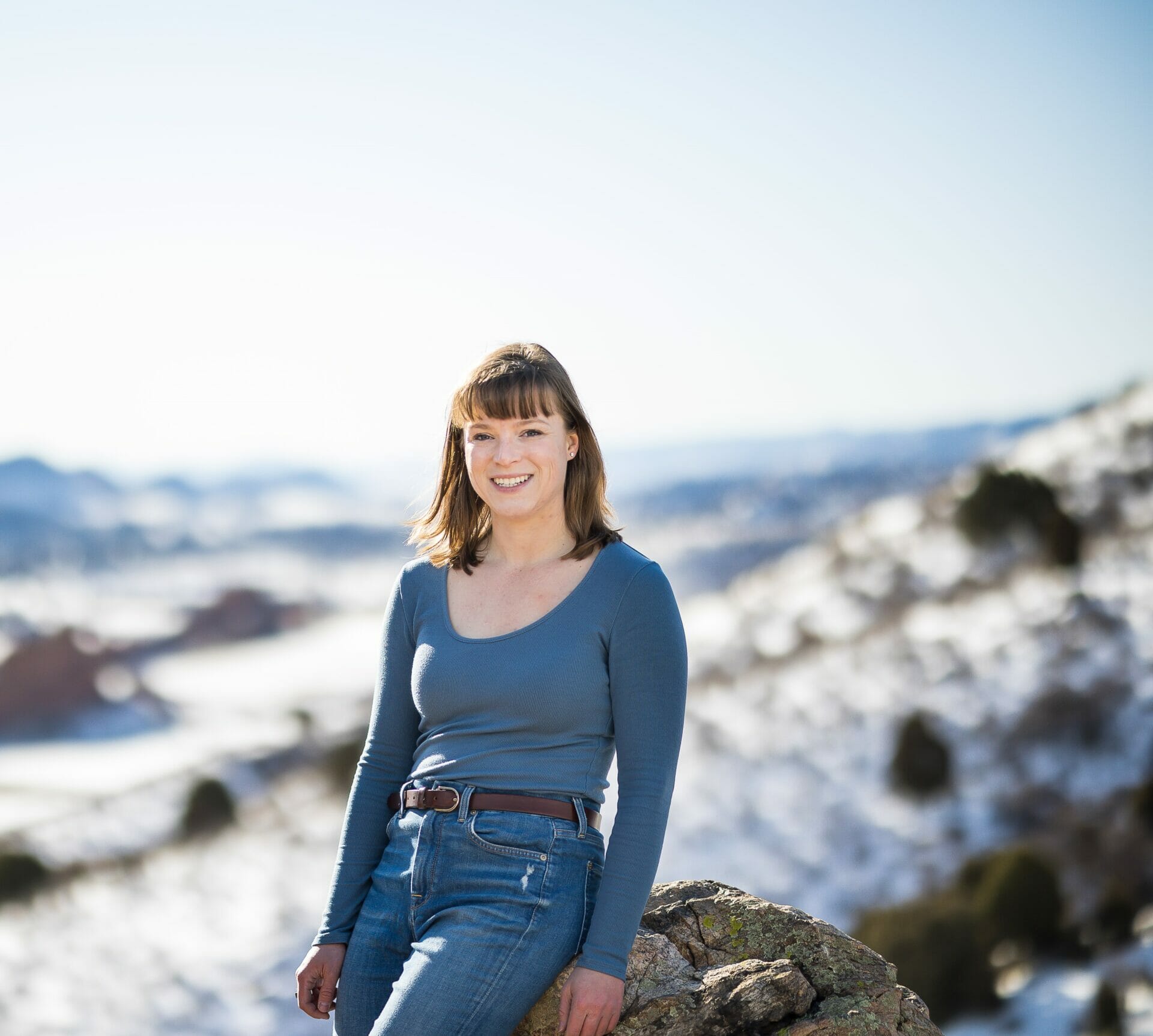
I empower others through nutrition to conquer their mountain adventures, drawing from my own experiences.
With a background in Biomedical Science and an M.S. in Human Nutrition, I’m a Certified Nutrition Specialist and Licensed Dietitian Nutritionist. My journey in functional medicine has equipped me to work alongside athletes and tackle complex health cases. As a passionate trail runner, backcountry skier, and backpacker, I strive to support others on their paths to peak performance and well-being.
Sign up for updates that come right to your inbox.